by Victor Lund on May 13, 2013

MLS and Association leadership brings forth an unusual ‘changing of friends’ on an annual basis. It is in the spring of each year that we begin to see these friendships take hold as CEOs arrive at NAR Midyear with their new Board Chairman in tow. It is all part of an important synthesis that takes place in our industry – one that often goes unappreciated. For five or more weeks each year, CEOs are on the road with their Chairman, building a friendship that is pivotal to a successful year, and in some cases, lasting a lifetime. WAV Group strategic planning appreciates the culture of leadership in real estate. We recognize that each year, the Board Chairman takes aim at challenges for the organization, balancing goals for the year with long range planning. The National Association of REALTORS® is even more specific about this paradigm. Each year, the NAR leader is explicit about their charge. In many ways, success comes from energizing the State leaders and local leaders to adopt the mission. Adoption by the nation’s Mega Boards plays a significant role in that success. Similar extension happens on MLS boards also. Continuity plays a key role in the long-term success of any MLS or Association. If the company were to dramatically change course each year with the churn of the Chairman of the Board of Directors, the disruption would erode the effectiveness of the company and undermine the services offered to the members. It is more common for the Chairman to pick a cause each year, but also play a sustaining role in moving along the long-range goals of the company. Great CEOs of Associations and MLSs recognize this. It is critical that they bring the past chairman, chairman elect, and standing chairman to industry conferences. Conferences are important conveyors of business strategy for these companies. These conferences provide two key references. One is the conference content itself, offering sessions about the topics of our day. The sessions also allow similar organizations to share strategic information and case studies about how they are moving their business forward. The second key reference is more informal. It is the conference behind the conference – the coffee breaks, and meals with peers where fellow chairman and executives commune with their peers about the goals of their organizations. When you add up the conferences that shape the direction of our industry, you recognize Read more...
by Victor Lund on April 11, 2013

On the business-to-business side of real estate, there are entities that cooperate with one another that also compete with one another. A common term for this in modern business management is a neologism called coopetition. Brokers competing against each other participate together in the MLS to share information and offer of compensation; and may be related to the same franchise. Agents who compete with each other participate in Associations of REALTORS and are often members of the same brokerage or franchise. Associations who compete with each other sometimes cooperate in offering MLS services. Within this system of collaboration, there are many mutual benefits that are created by working together or purchasing together. Usually the more purchasers or collaborators you have, the more effective or efficient they become. This is commonplace in real estate whereby purchasing in mass quantities is typically lower price than purchasing piecemeal. Where the efficiency creates a conflict is at a point where competition demands a unique value proposition. Channels or groups in real estate include: The National Association of REALTORS State Association of REALTORS local Association of REALTORS MLS Franchises Relocation networks Brokers Agents. In some way, all of these groups work together, but often their interests compete with one another – especially when it comes to offering a product or service to the agent. To the degree that more than one of these entities offer a product to the same agent, conflict and competition is created. Today, the industry stands on the precipice of great change. There are a variety of forces that have emerged to consolidate the channels where agents get the tools they offer. NAR offers tools as member benefits (included in dues) and retail products. State Associations offer tools as member benefits (included in dues) and retail products. Local Associations offer tools as member benefits (included in dues) and retail products. Franchises offer agent and broker tools as value for franchise fees, and offer retail products. Relocation Networks offer tools to broker and agent members and offer retail products. Brokers offer agent tools as part of their recruiting and retention program that validate their commission splits with agents. Depending on who you ask – it is about a $6 Billion dollar business ($600 per year per agent times a million agents). Survival of the Fittest Today, hyper local markets (also known as a fractured marketplace) define tendencies for product offerings and product Read more...
by Victor Lund on February 25, 2013

Real estate brokerages are way behind in the curve of excellence in lead management. This report is not about best practices of routing leads to agents, it is focused on measuring lead quality, and appending lead information with business intelligence that will convert more leads to drive more revenue. WAV Group’s brokerage business is focused on enterprise brokers, 500 agents or more – and usually a brokerage that also has some type of relationship with a mortgage or an insurance company. We use the term “home services” or “ancillary services” to refer to a brokerage that provides a full suite of residential, mortgage, and insurance services to the consumer through its enterprise business units. These companies also frequently have a complement of settlement services and home warranty services that may also be offered. Only brokerages that have significant size and offer a suite of home services will have enough data to profit from the harvesting practices outlined in this report. This report illustrates the best data analytic and business intelligences practices by the nation’s largest banks and mortgage companies. Using these examples, we explain how large real estate brokerages with home services offerings can become more competitive and more profitable from adopting these best practices. To access this report, please click this link.
by Victor Lund on February 23, 2013

In a press release yesterday, Indiana Regional MLS announced the selection of LPS as the vendor for consolidating 13 MLS systems into one. The effort was led by Kevin McQueen of Focus Forward Consulting. McQueen successfully managed to get 13 different MLSs serving an aggregate of 5000 subscribers to combine their MLS. The subscribers should be very excited about this. It is likely to reduce their costs and improve their services. There will be some bumps along the way as they accomodate change – but this is a great opportunity to advance the industry. Well done by all! There is a cool website that will allow those who may be considering similar initiatives to review the process which was expertly guided by McQueen. Click Here - http://indianaregional.org/ There is a handy Talking Points Document that tells the story of how it will work here: https://docs.google.com/viewer?url=http%3A%2F%2Findianaregional.files.wordpress.com%2F2012%2F12%2Firmls-updated-oct-2012-talking-points.pdf PRESS RELEASE JACKSONVILLE, Fla. – Feb. 21, 2013 – Lender Processing Services, Inc. (NYSE: LPS), a leading provider of integrated technology, services, data and analytics to the mortgage and real estate industries, today announced an agreement by which LPS Paragon technology will be used to consolidate the property listing data of 13 Indiana Realtor® organizations across 42 counties into a single MLS system for real estate professionals and their customers. For the first time, more than 5,000 real estate professionals across Indiana – who formerly used 13 independent MLS systems – will now have unrestricted access to more than 750,000 real estate listings through LPS Paragon’s advanced capabilities. Newly formed Indiana Regional MLS (IRMLS) will collect from and distribute listing data to the 13 Realtor associations in Indiana, allowing members to search across multiple markets and pay only one MLS fee to access the IRMLS data. “The ability to access a massive amount of aggregated listing data is going to help Realtors and their clients by allowing them to work more efficiently in the marketplace,” said Carrie Kendall, general manager of the new IRMLS and executive officer of the Lafayette Regional Association of Realtors® in Lafayette, Ind. “And, IRMLS now has the critical mass necessary to provide more services to our members and to their members’ clients for years to come.” Kendall said the participating associations worked collaboratively with industry consultant Kevin McQueen of Focus Forward Consulting Inc. and LPS to meet the challenge of a consolidation of this magnitude and achieve successful results. “In addition to Read more...
by Victor Lund on February 20, 2013

I do not really know Alain Pinel as well as I would like to. He sold the company that bears his name and pursued other interests. He is back now and runs the Luxury division of Intero Real Estate, one of Alain Pinel Real Estate’s chief competitors in San Jose, along with Coldwell Banker and others. What I do know of Alain Pinel I like and respect a lot. I have a similar level of respect for the maverick efforts of Intero, who used passion combined with technology (AgentAchieve) to launch a powerful brokerage in a very competitive marketplace. In a blog post today, Alain Pinel asked – Is the MLS in Danger? He says: there are signs suggesting that the MLS is going through some mid-life crisis. (Non MLS transactions are) depriving most local Realtors of the ability to objectively judge values and trends listing agents who bring only a few of their peers in the loop, can nevertheless achieve the objective: the sale. They may even argue that the fact that they cooperate with only a few, creates some urgency among the select group we must respect the seller’s decision to withhold a listing from the mls (the MLS) has its own agenda you may wonder if the tail (the MLS) is not wagging the dog (The Broker). One thing is sure; the tail (The MLS)is now bigger than the dog (The Broker). many brokers think that the MLS is now eating their soup, somewhat competing with their business, and too zealous regarding new constraining rules MLSes which offer all their members a vast menu of state-of-the-art apps which compete with similar services that the finest companies created, at great cost, to differentiate themselves from other brokers more and more syndicated sites and real estate related service providers which feed off of the MLS, progressively divert the consumer from our sites to theirs and capture value-pieces of our business Intero operates the bulk of their company operations in MLS Listings, an expertly operated MLS covering Silicon Valley, San Jose, and Monterey. MLS Listings is somewhat unique in that their Board of Directors are brokers, and all of the large firms are represented, including Intero. This is important to understand in order to frame the gravity of Alain Pinel’s post. His thoughts are couched in a deep understanding of what MLSs do, and based largely upon his experience with an MLS that Read more...
by Victor Lund on December 20, 2012

This may be the real future of real estate brokerage. You will need to endure a series of short product stories to understand the POD concept for real estate brokerage. The coffee industry hit a home run with coffee pods. As it turns out, consumers would be happy to pay more for coffee if they do not need to deal with filters, scoops, and cans. The coffee pod industry was able to sell less coffee for a higher price by offering convenience. The pod revolution did not end with coffee. The rather smart dudes and dudettes at P&G took one look at the coffee pods and deduced that they have powered stuff that consumers would like podded up too. They released dishwasher soap pods. The same effect took place. They found that consumers hated managing boxes of powder or gooey liquid soap. They put the soap into pods and were able to sell less soap at a higher price by offering convenience. P&G was so overjoyed, that they sought out pods for everything. Next up on their list was Tide Detergent. If you have ever had to go to a laundry spot to wash your laundry, you know how painful it is to carry around that big box of Tide. P&G put Tide into pods and were able to sell less Tide for a higher price by offering convenience. There is a pod thesis for real estate, but it has not been executed yet. It is a customer for life strategy where the real estate brokerage manages everything for the consumer. Imagine fractional ownership for homes, only you own the entire house. The consumer just writes a check every month. The broker handles everything including maintenance, mortgage, insurance, everything. Atlantic & Pacific Real Estate is sort of on the path to do this. They buy bundles of homes, fix them up, and either sell them or lease them out. They run the brokerage like a factory, and provide all home services – maintenance, landscaping, mortgage, title, insurance, taxes, etc. It is nice to have a hedge fund supporting this. In many ways, I think that an innovator like Redfin could tackle something like this too. It could be easily pulled off by any of The Realty Alliance firms too. They have all of the pieces in place, especially those with large warehouse lines of credit. For many large brokerages today, Read more...
by Victor Lund on December 17, 2012

Only the largest brokerages in a given region provide loan solutions through joint ventures or wholly owned mortgage companies. This provides these companies with a distinct advantage in many areas of providing a full array of consumer services around home ownership. For these companies, it is a generous source of additional revenue and the consumer loves the convenience. The Mortgage Bankers Association reported that independent mortgage banks earned between $2150 and $2450 profit per loan in 2012. The average production profit in basis points ranged between 107 and 120. The average production was between 1700 and 2000 loans per quarter. The total loan production expense (commissions, compensation, rent, equipment, and other expenses) averages just over $5100 per loan. About $3300 is personnel expense. Looking to forecast production for loans in 2013? Productivity per employee averaged 3.9. So choose 4 as your break-even analysis. To improve the penetration of home service offerings, it is important that brokerages seek tighter integration between business units, especially in the area of data sharing. All home services offerings need to be clearly articulated to the consumer on the broker website, email alerts, newsletters, phone hold recordings, at open houses, in listing presentations, on mobile solutions. All customer record data needs to be collected in DPN or Profit Power and shared with the mortgage company and other home services businesses. Update customer records each year by pulling data from CoreLogic or other public record source to identify mortgage rates. Need help? Call us.
by Victor Lund on December 10, 2012

All too frequently companies focus on broker tools or agent tools, losing sight of the tools used by great managers. Brokers who truly understand the value of office managers dedicate resources to deliver manager tools that drive company success and agent productivity. These tools fold into three categories: Market Analysis, Sales Analysis, and Agent Effectiveness. Market Analysis Tools Market Analysis involves using tools like Terradatum Broker Matrix or Trendgraphix. These tools give office managers access to two specific measurements that are key to success: Competitor Sales Volume and Agent Sales Volume relative to market pace. The first is a competitive overview of competitor sales volume vs. office sales volume. Managers can compare their office productivity relative to competition in the market to understand pace. Pace is a different measurement than market share, and is more important. Your office will always grow or shrink in sales volume relative to real estate cycles. Pace is the measurement of growth vs. competitive growth. If your office is up 22%, you may be excited. But if competitive offices are up 28% in the same market, you are losing pace. Likewise, an excellent manager may have a 10% loss in sales, but if competitors lost 15%, that manager’s office has out paced competitors by 5%. Sometimes even when you are losing, you win. The second measurement of success is individual agent pace and Sales Volume. How are each of your agents doing relative to each other. Your top-producing agent may be having a great year, growing business 22% over the prior year. However, a competitor’s top agent may be growing at 30%, out pacing your top producer. Great managers know this, and use these measurement tools to motivate agents in the office, and identify the best recruits from competitors. Aside from pace, managers can evaluate performance relative to days on market and list to sale ratio. Sales Analysis Great managers use a variety of tools to understand sales. Most MLS Systems and tools like the REALTORS® Property Resource provide managers with the ability to view sales activity on a map. It helps them identify neighborhoods and price points of sale activity so that they can both measure sales performance in hot areas and focus agent prospecting activity in those areas where sales are happening. This is a strategic farming strategy that great managers develop to succeed where others often just tread water. Agent Effectiveness Measuring Read more...
by Victor Lund on December 4, 2012

WAV Group had the opportunity to work with North Texas Real Estate Information Systems in 2012, facilitating the company’s strategic plan. NTREIS is among the largest MLS service providers in the nation, and probably covers more square miles of real estate than anyone (not fact checked). It is a great organization with a popular governance model that establishes each Association of REALTORS® as the MLS Service provider to their members, powered by NTREIS. The Associations are the first line of support, training, and billing to the agents. During our project, we had the opportunity to work closely with Cindy Miller who was the MLS Director for MetroTex AOR, the largest AOR, and the largest shareholder in NTREIS. Cindy Miller has joined the team at NTREIS where she can spread best practices of providing MLS Services of all Associaton Shareholders of NTREIS. Here is the press release Dallas, Texas (NTREIS.net) – North Texas Real Estate Information Systems, Inc. (NTREIS), announced Cindy Miller as the new Director of Communications. Ms. Miller joins NTREIS after eight years as MLS Director of its largest shareholder, The MetroTex Association of REALTORS, having previously served as CEO of local associations in North Texas and East Texas. With an ever increasing number of new products and technologies to roll out to subscribers, Ms. Miller’s primary role will be to keep the Shareholder Associations informed and trained on the latest offerings. In this new role, Ms. Miller is also leading the NTREIS Customer Care Team that directly supports the staff at each of the Shareholder Associations. “Cindy’s experience working with Associations and MLS management of various sizes along with her involvement in community and civic public relations campaigns provides unique insight to our efforts at NTREIS to effectively communicate with our Shareholders”, said John Holley, NTREIS CEO. “Having worked within the region for so many years, Cindy already has an established relationship with our Shareholders and with many of our vendors which has made this a smooth transition for our team.” Ms. Miller is a REALTOR Certified Executive as well as a certified e-Pro instructor. She will be presenting a workshop on “New Perspectives for Small Associations” at the NAR Association Executives Institute in San Diego in March 2013. Miller said “I am happy to be working with the great staff at NTREIS and look forward to the challenges ahead. In addition to our traditional means of communication, Read more...
by Victor Lund on November 20, 2012

There are lots of brokers who subscribe to MLS services. They are called participants, and as participants they are provided data rights beyond agents, and way beyond vendors or third parties. Moreover, participants are the nucleus of reciprocal offers of compensation, an agreement that if one broker represents a willing buyer and the other broker represents a willing seller, they will share compensation. There is a new brokerage model that has entered the MLS sphere, and I am not sure if it is a good thing or a bad thing. I will call this type of brokerage a “Data Only Broker” or DOB. These DOBs truly are licensed brokers under state law. They join the MLS conforming to policy. They pay dues. They typically do not have agents. You see, a DOB does not intend to list homes for sale, or show homes to buyers. They are simply in it for the Data Rights and possibly referral fees. Many of these brokers can make plenty of revenue with data, especially if they scale nationally. DOBs see themselves as mavericks of the digital frontier. They breathe the spirit of virtual brokerage, virtual office, consumer self service, digital transactions. I think that Brad Inman is calling this the “Latte of Real Estate” for his upcoming NYC conference. Inman has developed a thesis that buying or selling a home should be as simple as buying or selling a latte. After all, there is a lot of technology behind the Latte – bean growers, bean toasters, transportation logistics, customs, FDA requirements, restaurant licensing, health inspections, labor laws, service solutions, commerce, and the ever-present espresso machine. Despite all of this complexity, if you wait in line at Starbucks for about 15 minutes, you walk out with a delicious Latte. Brad is correct. Using the right technology, a consumer can purchase a home online. Interestingly enough, the digital home purchase was not developed by some outside pioneer looking to reThink Real Estate and deliver what is NEXT for the consumer. It was enabled and developed from within as a method to digitize and expedite the real estate transaction. If we write the book of digital genesis, Adam would be played by REALTOR® Associations who brought us electronic forms, and Eve would be played by title companies who brought us transaction management. I guess that the Apple would be Docusign, without which the original sin of an electronic transaction would not be possible. With sincerity, I pray that my Old Testament metaphor Read more...
by Victor Lund on November 12, 2012

The CMLS meetings (Council of MLS) were held on Wednesday, November 7th. There were numerous presentations but one in particular seemed to engage the Nation’s leading MLS executives in attendance – ReThink MLS. The question before the panel was “What If We Started from Scratch?” As we all know, MLS rules (including Broker Reciprocity) provides structure for how brokers and agents will behave when sharing listings with one another: Two problems have arisen since these rules were first crafted more than a dozen years ago. The MLS rules have become cumbersome in length and somewhat unwieldy to manage and enforce. Technology is advancing at a faster pace than the development of the rules. As the title to this article would suggest, the purpose of the session was to brainstorm, and contemplate ideas that might frame a more perfect union. It is upon this premise that Art Carter, CEO of America’s largest MLS – CRMLS proposed a thesis framed like a constitution or list of commandments. Disclaimer: Mr. Carter had feedback from his panelists and others on the creation of this list – so do not be alarmed – it is merely a thesis to promote discussion. The notion for discussion is that by creating a one page set of rules that outline the spirit of cooperation within the MLS – life may improve. You shall compensate other Brokers within the MLS if they bring a ready, willing and able buyer to your seller. You shall present offers in a timely manner to your seller and pay the compensation as published in the service if an agreement is reached regarding the sale of the property. You shall not place your listings in other places prior to your home MLS and this must be done within two days of getting the listing, unless your seller designates in writing otherwise. You shall not publish the listings of other Brokers via the Internet unless they have given approval and the listing brokerage is given credit for the listing on your website. Only fields that the Service allows for publication can be shown on the Internet unless the Brokerage operates as a virtual office website, then the Broker must show electronic evidence of a relationship with the viewing consumer. Remember the rule of cooperation, when placing a listing in the service, you are agreeing to help other brokers bring a ready, willing and able buyer Read more...
by Victor Lund on November 1, 2012
While brokers have lots of technology tools at their fingertips today, a high impact website is still a critical tool driving success for any size real estate company. Third parties continue to gain traction and traffic with consumers because they know what consumers are looking for and they deliver on their needs consistently! If brokers want to become THE source for real estate consumers, they need to find ways to enhance and re-invent their own web presence. Brokers also need to learn about how to use their online presence to nurture new customer relationships for their agents. RED and RE Technology are working together to host a really interesting webinar to help brokers learn how to make their online presence work much harder for them and become the preferred choice of consumers online. In less than an hour, learn how you can start to drive more traffic to your site, improve your consumer experience and turn visitors into leads! Take advantage of this FREE webinar and learn how to make your online spending work much harder for you. Here’s just a few of the tips and tricks you will be learn in this action-packed hour: Don’t waste a consumer’s time…understand the top 5 behaviors! See the “Make or Break Page” Learn the key performance indicators for your site Opportunities in “Organic Search” Today’s SEO: Think Beyond the Link Understand what the user – the consumer – really wants Date:Monday, November 5th Time: 11 am Pacific, 12 noon Mountain, 1pm Central and 2 pm Eastern Time Speakers David Camp, RED Platform Expert Real Estate Digital Corey Quinn VP, Business Development The Search Agency, Inc.
by Marilyn Wilson on October 10, 2012

MLSs face many decisions about what technology services to offer to their members. Budgets are tight and decisions need to be better justified than ever before. MLS technology committees and leadership need to sift through hundreds of products and multiple presentations before deciding what types of products make the most sense for their members. It is a difficult and expensive task to provide meaningful, relevant and contemporary product offerings to help agents and brokers better serve the needs of their clients. The first annual WAV Group MLS Technology Adoption study was designed help MLSs better understand the types of technologies being used most often. The attached report is deigned to MLSs have a better understanding of what successful adoption looks like. The report is also designed to provide you with tangible ways to improve adoption of the technologies you have chosen to offer to your customers. Here are a few of the takeaways from the study that we found most interesting: Top Producers DO Matter More The study proved, once again, that the 80/20 rule is alive and well. In just about every case, 20% of MLS subscribers complete 80% of the transactions. It is clear that top producers and aspiring top producers are the two most important groups for technology adoption. These groups are the most proactive in many respects and their technology adoption patterns are no different. They use more technology than others because they are transacting more business and looking for new ways to differentiate themselves. To ensure a successful rollout, MLSs need to consider the needs of top producers. Even with this type of sales concentration, most MLSs still think of adoption based on their entire subscriber base. This is simply not realistic and can even be dangerous. If an MLS chooses technology based on the need to achieve adoption for the masses without thinking about the true value of the tool, they may make decisions based on the lowest common denominator, rather than providing the best tool for the most active producing agents Technology decisions need to be made to serve the needs of those that are driving the industry with transactions. Instead of thinking about achieving 40% adoption of all customers, how about thinking about 50% adoption of the most productive agents? Here’s a more meaningful way to project and calculate adoption of technologies considering the concentration of sales success among top producers: Top Producer Adoption Read more...
by Victor Lund on August 16, 2012

Marilyn Wilson’s post yesterday set off a storm. The DMV, known for its historically horrid service experience has changed their ways. They do a good job, at least here in San Luis Obsipo, CA. When WAV Group is providing strategic planning support to an MLS, Association, Technology company, or broker – we measure stuff. There is usually a comparison chart created that shows a checklist of features or service offerings that compares company or product A vs. company or product B, C, and D. This is an important exercise and the information drawn from this type of benchmarking is helpful at directing organizations to fill gaps in their offerings. Component to measuring features or services, is measuring satisfaction. For people using a product or service, we need to know how much they value it or what they hate about it. The survey question works with branches. Question 1: Do you use X? If so, Question 2: how would you rate X? Question 3: Why did you say that? WAV Group also measures adoption. This is sometimes the funny part. We get adoption numbers if they are counted, and we also ask customers if they use a product. Our current national MLS survey has a question about RE Technology. Do you use RE Technology? How long have you used RE Technology? Some agents indicated that they have used RE Technology, and a number of other products like RPR for 10 years (RE Technology and RPR have only been around for 3 years). What customers do and what they think they do are often very different things. There is much to be learned from this. At the end of the day, the performance of a brokerage, MLS, Association, or Technology company comes down to communication and execution. A bunch of leading MLSs and Associations do a good job at this. Houston Association is a good example, but there are plenty others. Pretty much every Mega-Board is nailing it – I pay attention to Orlando, Las Vegas, Long Island, Metro-Tex, Main Street and others. MRIS is a good example, I also pay attention to MRED, MLSListings, The MLS Claw, Sandicor, MLSPIN, MyFlorida MLS and a bunch of others. As for brokers, I like what Intero is doing. They have three posts each week that go out to all of the agents. One comes from the CEO, another comes from the company Attorney, and Read more...
by Victor Lund on August 10, 2012

In a way, RE Technology is a sand box for WAV Group. We get the opportunity to look at patterns of behavior and communications among real estate agents and brokers on a macro level and a micro level. Recently, we began to modify activities to determine how it may impact RE Technology readership. Our latest test was to change the time that the RE Technology daily digest goes out. The RE Technology daily digest is an interesting communication tool. Only agents who opt into getting the RE Technology newsletter receive it. Most agents choose to access RE Technology content through the message of the day in their MLS system. I appreciate that many agents do not want any more email. Regardless, our staff came up with the idea that the digest should go out in the morning before Inman News and RIS Media. RE Technology is not a news site, but we do publish press releases in the digest. The notion was that our audience would get our newsletter first; read it first; and think that we were closer to the pulse of the industry. It sounded like a good argument, so we set it, and forgot about it. Recently, we made upgrades to the daily digest. Readers wanted to be able to share the digest with others, and wanted to be able to access past newsletters as a reference. We added this functionality and when we pushed the new newsletter to our production servers, we once again discussed the timing. Traditionally, the digest started sending at 3 a.m. PST; 6 a.m. EST. We developed a new theory based upon personal habits that, when an agent gets to their computer in the morning, their inbox is stuffed with newsletters and they scan them and delete them as quickly as possible. That is what I do. Why would an agent or broker be any different? The team agreed to move the time to 8 a.m. PST, 11 EST to see how our traffic would change. Presumably when you send tens of thousands of emails at a different time of the day, user behavior will change…. Guess what…. Here is the illustration As you can see from the chart – we compared 5 days of traffic in June (250,000 visits) to another 5 days of traffic in July (250,000 visits). We only looked at Monday through Read more...
by Victor Lund on July 27, 2012

American business is founded on the principal that pricing for a product or service is based upon what a willing seller will accept, and what a willing buyer will pay. This happens on an individual basis with each transaction, and price fixing is not allowed. Recently, Casey William Hyland who purchased a home from a Home Services of America brokerage, Semonin REALTORS brought a suit challenging the 6% commission rates on real estate transactions. His claim indicated that the 6% rate was price fixing and is a Sherman Anti Trust Act Violation. When there are multiple transactions of commerce, pricing patterns emerge. Consider the grocery store shelf. Within a given product category of similar items, pricing becomes normalized around a price point, plus or minus 20%. This trend happens everywhere, in every industry, and well beyond the grocery isle. The Plaintiffs claims were articulated as follows: Defendant engaged in parallel behavior by charging a “standard or typical commission of “6%” for “virtually standardized Services;” and Defendants “are expressly aware of the fee charged by one another” via their membership in and organization of at least 28 Multiple Listing Services (“MLS”) in the Commonwealth; and Defendants require that the real estate brokers pay their franchisees the “regularly charged brokerage commission or fee” for any home that the brokers purchase for their own habitation. The Defendants have engaged in parallel pricing of real estate broker commissions since at least 1991 at a “standard” or “typical” 6% even though: (a) the costs of providing these services have decreased, and (b) the prices of real property in Kentucky have increased dramatically; and The Defendants have “an aggregate market share in excess of 70% and, in certain areas of the state, in excess of 90%; and The Defendants have “boycotted price cutting rivals, such as Help-U-Sell…a non-Internet based discount brokerage firm that recently began operating in Kentucky.” The court ruled in favor of Homes Services. The Plaintiff failed to satisfy parts of the Sherman Act Test which include (1) a contract, combination, or conspiracy; (2) restraint of trade; and (3) an effect on interstate commerce. There are many interesting considerations that come from reading about the facts in this case regarding the conduct of brokers and agents when they are discussing commissions and fees. Clearly our industry has found an economic balance around a commission of 6%. 6% represents much more compensation to the practitioner Read more...
by Victor Lund on July 25, 2012

Game changers happen when businesses test radical strategies. When a company breaks from the pack they learn things that none of their competitors learn. They understand a strategy that nobody else as any experience with. They grow their business wisdom and often find new ways to edge out the competition. By studying the impacts of strategies like withdrawing from listing syndication; launching single listing websites or virtual tours; and, withdrawing from IDX, marketers can learn volumes about how these strategies impact their online strategy. Listing Syndication Strategies that work WAV Group has been studying listing syndication strategies for more than 7 years. The depth of the data that we have aggregated and the case studies that we have modeled has informed performance increases for brokerages nationwide. There are three strategies that have demonstrated effectiveness: Scarcity, Abundance, Data Variance. We have clients using every one of these and they all work. Using the correct strategy for your marketplace is key to success. How does the syndication strategy impact SEO This year, WAV Group is extending our research methodology to understand the impact that syndication strategy has on search engine optimization. The methodology is rather simple. Take a broker’s listing and check the first 4 pages of popular search engines like Google, Yahoo, and Bing. Record the website domains and the order in which they appear. Address search is known as “long tail search” and it is important for two reasons. First, the searcher is presumably more valuable because they are highly focused and already partially informed (they know the address). Secondly, the volume of these searches is immense. The findings are impressive. Once thing to remember is that many third party websites have every property in America on their website – active or off market. Why aren’t brokers doing this? Why aren’t MLSs helping? How do single listing websites and virtual tours impact SEO Nothing is more powerful for search engine optimization than purchasing the address domain name and launching a single listing website. Beyond that, a virtual tour done correctly does an excellent job of enhancing search engine optimization. Virtual Tours done right means that the tour is built in HTML, not flash. Virtual tours are dynamically created using MLS data on every listing and updated with IDX. Non-branded virtual tours are posted to the MLS and distributed through the IDX feed. All virtual tours are hosted on the broker Read more...
by Victor Lund on June 13, 2012

WAV Group partner, Victor Lund will be attending the 2012 CoreLogic User Group Meeting and Summit in Chicago next week. The event looks to be information-filled with presentations that provide insight in guidance into the future developments of MLS systems that power about half of America’s MLS. Some of the topics include updates on the ongoing development of the core functionality in Fusion MLS, Matrix, and Tempo. These systems are deployed to many of the largest MLSs in the country. CoreLogic will also be releasing information on advances in Mobile, Fusion CMA, Social Media, Fusion Contact Management, Fusion Stats Pro, RETS, and Realist. The company will offer many product break out sessions to to discuss future product features and gather customer feedback on how CoreLogic can improve its products and services. MLS executives provide some of the best ideas for new features, and system UI enhancements. WAV Group is among the leading consultants providing strategic planning, research, MLS Consumer Website Planning, and vendor selection services to the MLS industry. WAV Group is launching a new program called Consumer Source aimed at collecting consumer information that informs strategy in real estate. Lund will also be meeting with MLSs about RE Technology – a free communication resource made available through MLS partners to more than 700,000 real estate professionals. RE Technology is particularly excited about the recent roll out of SuccessStore and SuccessTracker – its eCommerce and App Store solution that supports MLSs and Associations at providing technology solutions to agents and brokers. If you need to carve out some time to meet with Victor Lund, call 805-709-6696 to schedule some time.
by Victor Lund on June 5, 2012

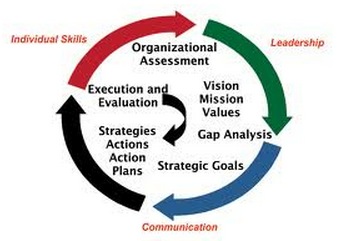
Preparing for a Strategic Planning session involves a process of gaining a holistic view of the organization from every perspective. Understanding your customer’s perspective is always the primary driver that informs everything. But understanding of staff culture and capabilities; system strengths and limitations; financial conditions; and industry trends pave a path to developing a plan that works. At the end of the day, the board of directors and the management team agree to a group of initiatives that will make the business stronger, and the strategic plan is born. Some organizations in real estate take the plan and execute it flawlessly where others fail. Harvard Business Review outlines three causes of failure that recur in organizations that cause great plans to go off track. We see these three causes persistently in real estate and they are worth examination. Passive aggressive disagreement: It’s unlikely that everyone in an organization will agree with all of the nuances of a major strategic shift. Disagreement can be based on logic, experience, or (perhaps unconsciously) discomfort with change or loss of power. In any case, if the culture of the company does not encourage dissent, the resistance will go underground. People will voice their support but not actively do anything to make it happen. To detect this in your organization, you can ask stakeholders the following questions. 1. Do you believe that the strategy is on target? 2. Do you believe that others will agree that the strategy is on target? The answers will be amusing. Normally people will tell a leader that they are aligned with the plan (perhaps mentioning their favorite piece), but will be outspoken about how their peers may have reservations. Fear of confrontation: In most nice organizations where teamwork is encouraged, volunteer board members hesitate to confront leaders who are not fully engaging in the strategic plan. They may not want to make waves or fear harming the relationship. So instead they try to work around it and end up accepting and even promoting a sub-optimizing the strategy. Allowing Directors to anonymously grade the progress on each segment of the plan during board meetings (silent ballot) is a great way to get unfiltered feedback. Lack of persistent top-down demands: If the successful implementation of a strategy requires change across a number of functions, then a senior leader needs to get everyone on board. Without this explicit expectation — reinforced again Read more...
by Victor Lund on May 25, 2012

The news of Edina Realty pulling their listing from Realtor.com have been rippling through the industry since announced. There are probably a small handful of brokers who have done the same, but that is about it. This became newsworthy because Edina Realty is a big broker – really big. Moreover, the parent company, Home Services of America is second only to NRT in terms of being the largest brokerage in America. NRT has about 750 offices and 250,000 sides. Home Services have about 300 offices and does about 125,000 sides. There is a lot at stake for syndication and online advertising if Edina realizes business growth as a result of their decision. Edina Realty is a smart company. This was not an emotional decision, but the result of intense and calculated strategic development. They have researched the opportunities and risks carefully and will measure impact to many facets of their business. The Home Seller Clearly, Edina Realty needs to not only promise great marketing on a seller’s property, but they must deliver. One measure of this will be Days on Market. Edina (and their competitors) will know if their marketing strategy lengthens or shortens days on market. The second measure will be List Price to Sales Price Ratio. Edina will measure the variation from their historic or competitive benchmarks for list to sale price. Edina agents use this information in their listing presentations today. The Real Estate Agent For agent recruiting and retention, Edina Realty will need to demonstrate and build confidence in their new marketing strategy. Their leadership has been to every office and explained the decision, arming agents with information that justifies the initiative. Today, Edina Realty agents support the decision. But that could change. Agents expect their brokerage to give them the best opportunity to be successful. In Edina’s case, there is instant street credibility to an agent who works for Edina. They have earned the respect of the customers they serve over decades of delivering satisfaction. The brand means something. But agents also expect tools for managing their business and marketing their services. Syndication is only a piece of that. Edina does a lot more and their agents know it. However, at the end of the day, the agents expect their brokerage to deliver leads. Today, Edina knows exactly how many leads they generate from every syndication channel. They also know exactly what happens when they Read more...